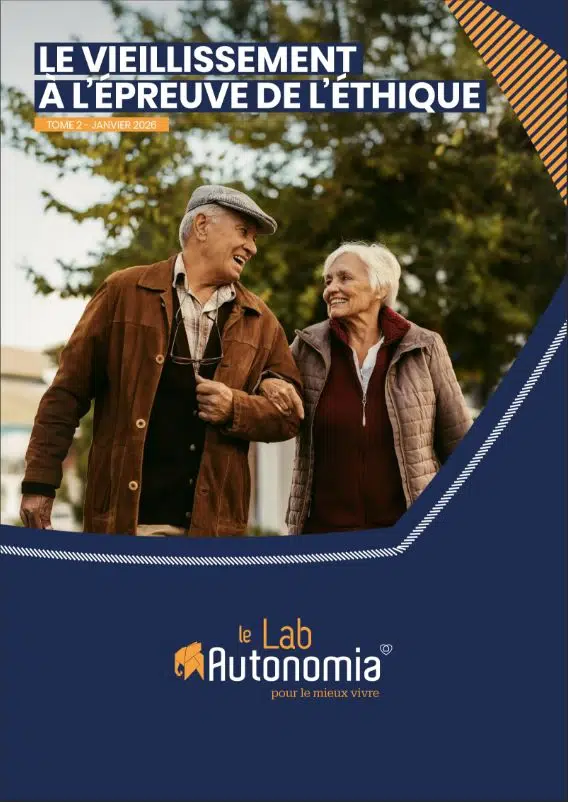
The Autonomia Lab has published a new white paper on the ethical challenges of aging and home care: “Aging Put to the Ethical Test”.
This white paper explores the profound changes taking place in the home care sector through a lens that is rarely addressed: that of ethical doubt in the caregiving relationship and the recognition of care professions.
A Look at the Reality of Home Care Jobs
Jobs in home care have long been overlooked or reduced to technical tasks, even though they require a much broader range of skills.
The white paper highlights several findings from the field:
- the highly technical nature of interventions involving individuals with declining independence
- the importance of interpersonal and emotional skills in counseling
- the complexity of the situations faced by those receiving assistance and their loved ones
- the tension between identified needs and the actual perceptions of the individuals receiving support
These professions thus rely on a delicate balance between expertise, adaptability, and an understanding of human situations.
Refusal of assistance and self-reliance: a key issue
The document also highlights a key point that is often overlooked: the refusal of assistance.
In many situations, the person receiving support does not perceive their needs in the same way as professionals or caregivers. This discrepancy can lead to misunderstandings or even obstacles in implementing solutions.
The white paper thus highlights the importance of:
- respect people's right to self-determination
- incorporate emotions and individual perceptions
- tailor support to non-linear life paths
A project led by Lab Autonomia
This publication is part of the work of the Lab Autonomia, a research laboratory dedicated to issues related to aging and home care.
It opens with an editorial by Véronique Cayado, a doctor of psychology and research director at Lab Autonomia, who has been working for several years on social representations of aging and care practices.
The white paper also includes a collection of contributions and insights from the field, illustrating the diversity of situations encountered in supporting older adults and caregivers.
Better understanding for better support
This work is intended for both:
- to home care professionals
- to stakeholders in the health and social services sector
- to companies committed to supporting employees who are caregivers
- as well as caregivers and individuals affected by a loss of independence
It aims to deepen understanding of the human aspects of support and to encourage practices that are better suited to real-life situations.