What if 80% of falls among older adults at home could be prevented by making simple adjustments to their environment?
Every year in France, there are approximately 400,000 falls among older adults, 12,000 of which are fatal (source: Santé publique France). Beyond physical trauma, falls are the leading cause of dependency. However, making a home safe doesn’t always require major renovations. This guide provides you with the tools to identify risks and take concrete action today.
Analyzing the causes: Why do we really fall?
To take effective action, it is crucial to understand that a fall is rarely caused by a single isolated event, but rather by a combination of factors. Geriatricians generally identify three risk factors that we can address.
On the one hand, the intrinsic factors relate to the senior’s direct health status: uncorrected vision loss, balance disorders linked to the inner ear, or sarcopenia (natural muscle loss) that reduces lower-body strength. On the other hand, extrinsic factors are related to the environment: lighting that is too dim, electrical cords snaking across the floor, or worn-out shoes. Finally, behavioral factors, such as rushing to answer the phone or taking certain medications that cause drowsiness, often contribute to the accident.
Hazard Zones: Identify Them to Better Protect Ourselves
Falls are not an inevitable consequence of aging, but are often the result of a mismatch between a person’s abilities and their environment.
Table of Priority Risks by Area
Housing section | Main risk | Simple solution |
Bathroom | Slipping (wet surfaces, bathtub edge) | Non-slip mats, grab bars |
Room | Falling while getting up (low blood pressure, dim lighting) | Automatic nightlight, bed at the right height |
Stairs | Loss of balance (poor footing) | Double handrail, contrasting stair nosings |
Living Room / Hallways | Obstacles on the ground (rugs, cables) | Removing the carpets, securing the wires |
Step 1 — Immediate adjustments (no construction required)
Prevention starts with “decluttering” your living space. A safe home is one where you can move around freely.
Lighting: Install motion detectors in areas used at night (between the bedroom and the bathroom). Good lighting reduces the risk by 30%.
Floors: Remove rugs or secure them with special double-sided tape. Avoid floors that are too waxed or slippery.
Storage: Place everyday items within easy reach (between hip and shoulder height) to avoid using step stools or unstable chairs.
Step 2 — Technical Renovations and MaPrimeAdapt’
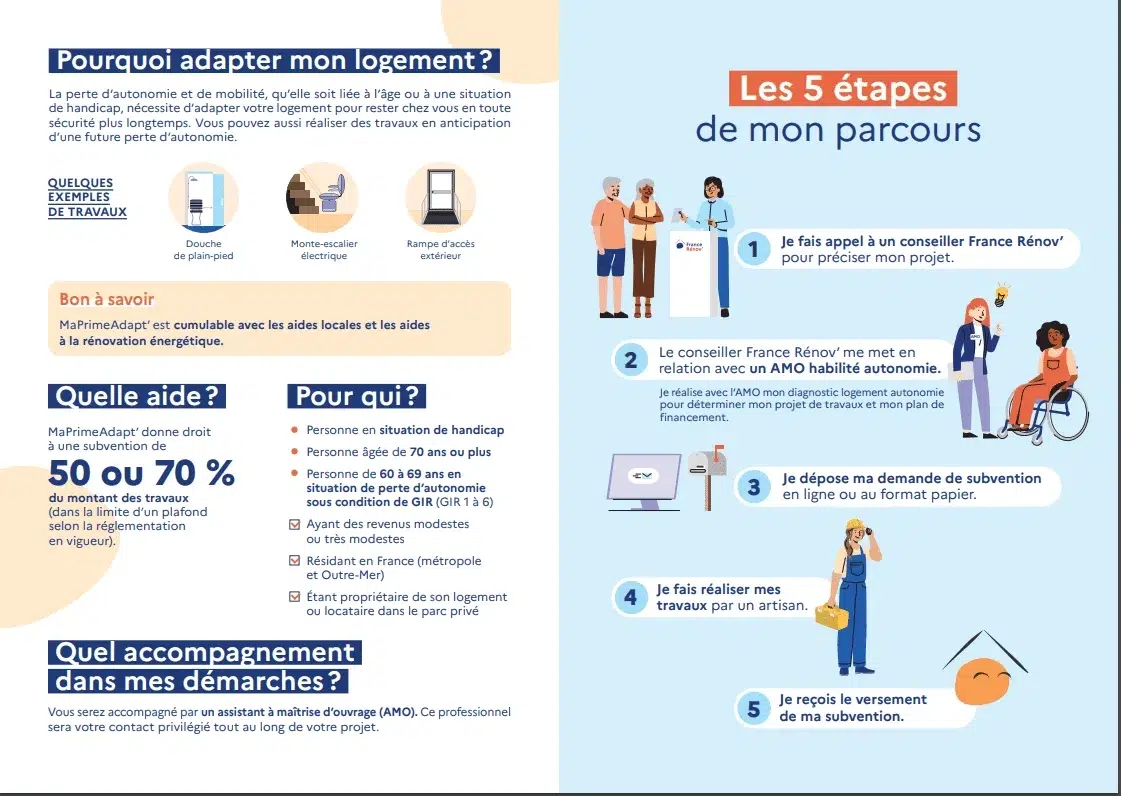
For high-risk areas such as the bathroom, special equipment is required. In 2026, the MaPrimeAdapt’ program can cover up to 70% of the cost of these installations.
- The walk-in shower: Replacing a bathtub with a walk-in shower remains the most effective solution.
- The stairlift: Essential if getting upstairs becomes difficult, it allows you to continue using your home to its fullest.
- Remote monitoring: Essential for alerting others in the event of a fall. Modern solutions (automatic fall sensors) detect the impact even if the person is unable to press the button.
Step 3 — Maintain physical fitness
Design isn't everything. Prevention also depends on your loved one's health.
Eye exams: Poor visual field is responsible for many falls over low obstacles.
Reviewing medications: Certain medications (sleeping pills, blood pressure medications) can cause dizziness. Talk to your doctor about this.
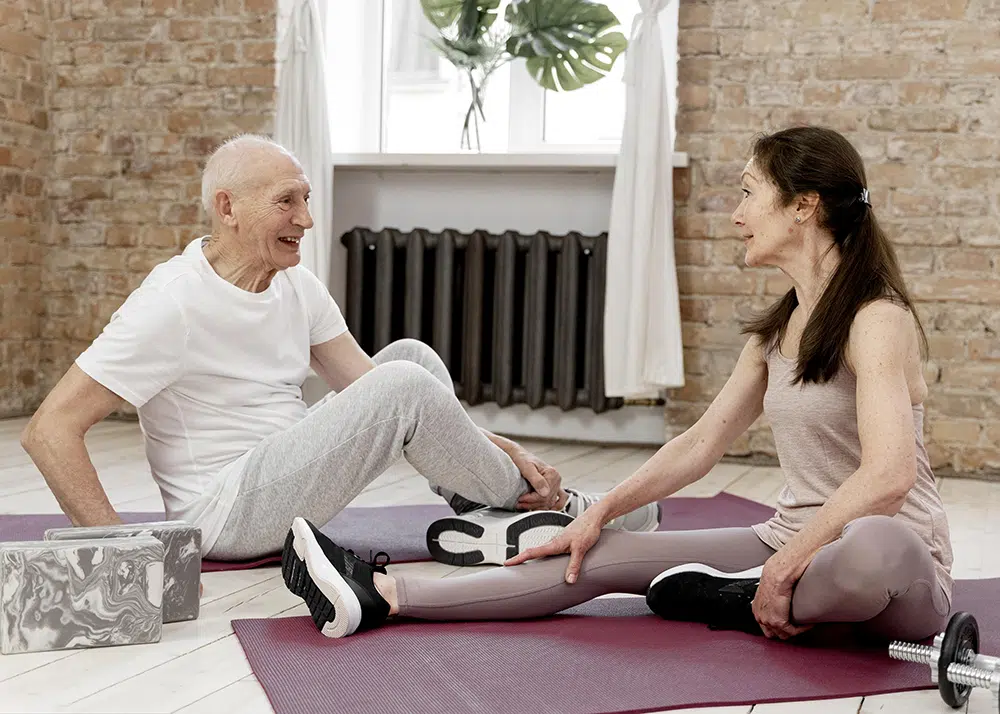
Physical activity: Simple balance exercises and leg-strengthening exercises cut the risk of a serious fall in half.
Checklist — Securing Your Home Room by Room
- Entrance/Hallways: No electrical wires run through the walkway.
- Bathroom: Installation of a shower seat and a grab bar.
- Kitchen: Heavy utensils are stored on the bottom shelf, while the most frequently used ones are kept at counter height.
- Bedroom: A telephone or emergency call button located immediately next to the bed.
- Stairs: Bright lighting at the top and bottom of the stairs.
- Exterior: No slippery moss on the pavers or loose steps.
FAQ
What is the main cause of falls among older adults?
It is often a combination of factors: a loss of muscle mass (sarcopenia), declining vision, and a cluttered environment (rugs, small pieces of furniture).
Does in-home monitoring prevent falls?
No, but it drastically reduces the consequences. A person who has been on the ground for more than 12 hours faces a very high risk of death. Remote monitoring ensures a rapid response.
What financial assistance is available for installing a senior-friendly shower in 2026?
MaPrimeAdapt’ is the primary financial assistance program. It can cover up to €15,400 in renovation costs (out of a total of €22,000 before tax), depending on your parent’s income.
My relative refuses to remove their rugs. What should I do?
Suggest compromise solutions, such as invisible anti-slip strips that can be stuck under the rug, or replace them with extra-flat, weighted models
Are you an employee?
Your company can help you make your parent’s home safer through specialized home safety assessments. Suggest Autonomia to your HR department.